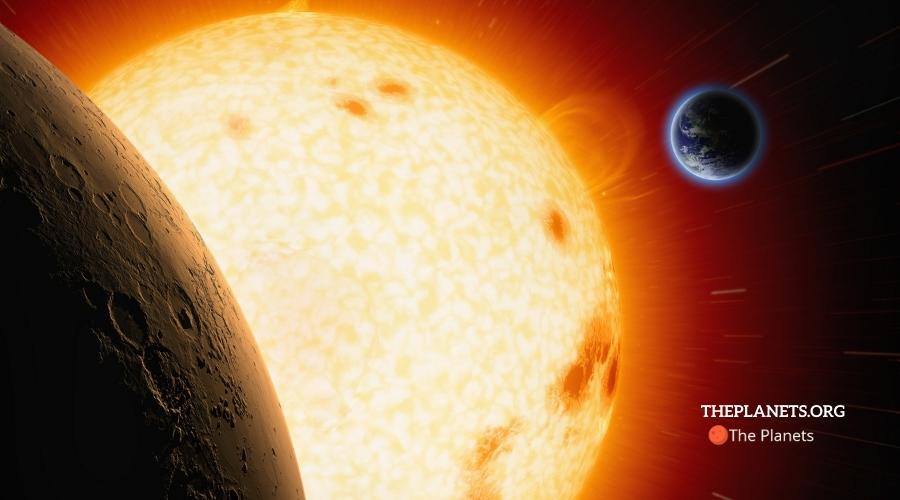
The distance between the Earth and the sun is the perfect distance between those two objects. It sits in a region known as the ‘Goldilocks zone’, because it is just right. If the Earth were closer, the sun could cause life on the planet to burn up. If the Earth moved away from the sun, it could become too cold for humans to survive. People sometimes think that we’re getting closer to the sun and talk about how the Earth might change. Though climate change can affect temperatures and lead to hotter or colder days and other weather conditions, you cannot blame those changes on the distance between the Earth and the sun because this distance has not changed.
Solar System Balance
If you think that we’re getting closer to the sun, you need to take a look at the balance of the solar system. This balance places each planet far enough away from the sun that it won’t get pulled into the gravitational pull. The sun has an intense gravitational pull that attracts objects and pulls them closer. This also creates an elliptical path that is similar to an oval. Instead of the planets following a spherical path, they move in an oval around space. This ensures that Earth and its residents are the perfect distance from the sun.
Moving Away from the Sun
Experts believe that instead of getting closer to the sun, we’re moving away from it. As the sun loses mass, its gravitational pull becomes weaker. Instead of pulling Earth closer, this pull allows the planet to move back slightly. This change is minuscule at best and reaches a maximum distance of 15 centimeters a year. Some research indicates that the planet may move away from the sun because of its tides too. The tides help Earth push back against the gravitational pull and keep the sun from pulling us closer.
Closest to the Sun
Though we’re not getting closer to the sun, there are days when our planet is the closest to the sun. Astronomers call this date the perihelion, which comes from Greek words that mean sun and near. In 2020, this date fell on January fourth for those in some time zones and January fifth for those in other time zones. Earth is usually more than 94 million miles from the sun, but during perihelion, we’re around 91 million miles away. Perihelion usually falls sometime in January.
We’re the largest distance from the sun in the summer, usually around the middle of July.
What if Earth Was Closer?
Many people worry about what would happen if the sun and the Earth were closer together. This would likely change our environment to match those found on Venus. Temperatures would rise at a rapid pace and could cause Antarctica and other regions to turn green as the ice and snow melted. This would fill the oceans with extra water from the melted ice caps and cause flooding and other serious issues such as hurricanes and typhoons. The sun could also release particles that struck the Earth, which would kill people and crops.
What if the Earth Moved Away?
People on Earth would experience other issues if the planet moved away from the sun. Most of the heat that we get comes from that object. The way our planet moves helps certain regions stay warmer than others. If we moved far enough away from the sun, we could expect to see major changes that affected our way of life. The hottest parts of the planet would become much cooler and could eventually suffer from ice and below-freezing temperatures. Even the Bahamas and other tropical destinations could become freezing cold over the coming months.
We’re Not Getting Closer
Though some people claim that we’re getting closer to the sun, Earth moves back from the sun a small amount each year. This is an important distinction to make because getting closer to the sun could cause some serious changes to the planet. Experts believe that getting even 1.5 million kilometers closer could wreak havoc on our ecosystem. That’s only four times the distance between the Earth and the moon. As we’re not getting closer to the sun, you won’t need to worry about melting ice-caps, high temperatures and hurricanes caused by environmental changes anytime soon.